
Hare Krishna
Hare, Hare, Krishna, Krishna

When I was rector of a large Episcopal church in La Jolla, California, I used to love to go downtown on Saturday night, when the Hare Krishnas were marching through town.
Chanting, as they went by Ben & Jerry’s ice cream store:
Hare Krishna, Hare Krishna, Krishna, Krishna, hare, hare.
Whether to show off, loved the break from stiff culture, or because I couldn’t help myself, I fell in behind them, trying to imitate their rhythmic dancing and chanting.
It was tempting for those of us trained in the post-enlightenment west, to think they were silly.
Most of us knew families in which one younger member had gone seriously off course, and joined what we called, a cult. Maybe even become a Hare Krishna.
As I think back all those years, I realize what I couldn’t let myself feel at the time, was the infectious joy that seeped from them as they marched along.
If someone saw me coming along behind them, I assumed they would think I was making fun of them. Maybe that’s what I tried to tell myself.
In fact, I remember my heart filling as my voice blended with theirs.
They used to be in public places, airports, department stores. People didn’t know what to make of them.
I wish they would reappear now.
Those monks who walked for peace from Dallas to Washington. D.C. in the dead of winter, are the closest I can think of, who are doing anything like the Hare Krishnas did.
They lit up the hearts of people in the deep south, seemingly the unlikeliest people to respond to saffron robed Buddhist monks.
Again, we stiff-necked westerners may think it’s blasphemous to be happy, to dance and sing, while people in Iran are suffering from our death-filled attacks.
But suppose it’s not blasphemous to be happy in the face of suffering, our own and the world’s?
Suppose it’s mandatory.
The world will always be filled with suffering. Part of our own suffering is our feeling helpless in stopping the hatred and injustice.
But what if Gandhi, the Gautama, Dr. King, Jesus, were not speaking merely in metaphor when they taught their followers to meet suffering and injustice with love.
Passive resistance became the most potent weapon in the struggle for racial justice in our country.
Most of us assumed you would have to be a spiritual giant, an unusually committed and disciplined person, a convicted, converted religious person, to be able to meet cruelty and injustice with love.
But suppose that reservoir of love is lodged in your heart, and once you acknowledge that, you dare let it be the source of your stance in the world?
After those monks arrived in Washington, they did a teaching, to which they invited whomever chose to come.
I watched on You Tube. As the teacher went on, my mind had begun to wander. The camera panned across the monks sitting in rows behind the teacher.
One of them had fallen dead asleep. I immediately felt invited into their company.
I have love in my heart, just as you do. Once I lift my head out of the headlines, I admit, I’m still happy.
Just like you.
We’re happy, even in the face of terrible suffering, just as the Dalai Lama, Gandhi and Martin Luther King are.
Because God has put peace, happiness into our hearts.
And our job, our opportunity, is to dare to let it have a place in how we meet the world.
Do we dare have compassion for Donald Trump, for Vladimir Putin, whose suffering has caused them to shutter their hearts?
Maybe the only path to peace in the world, is the peace that leads from my heart to yours.
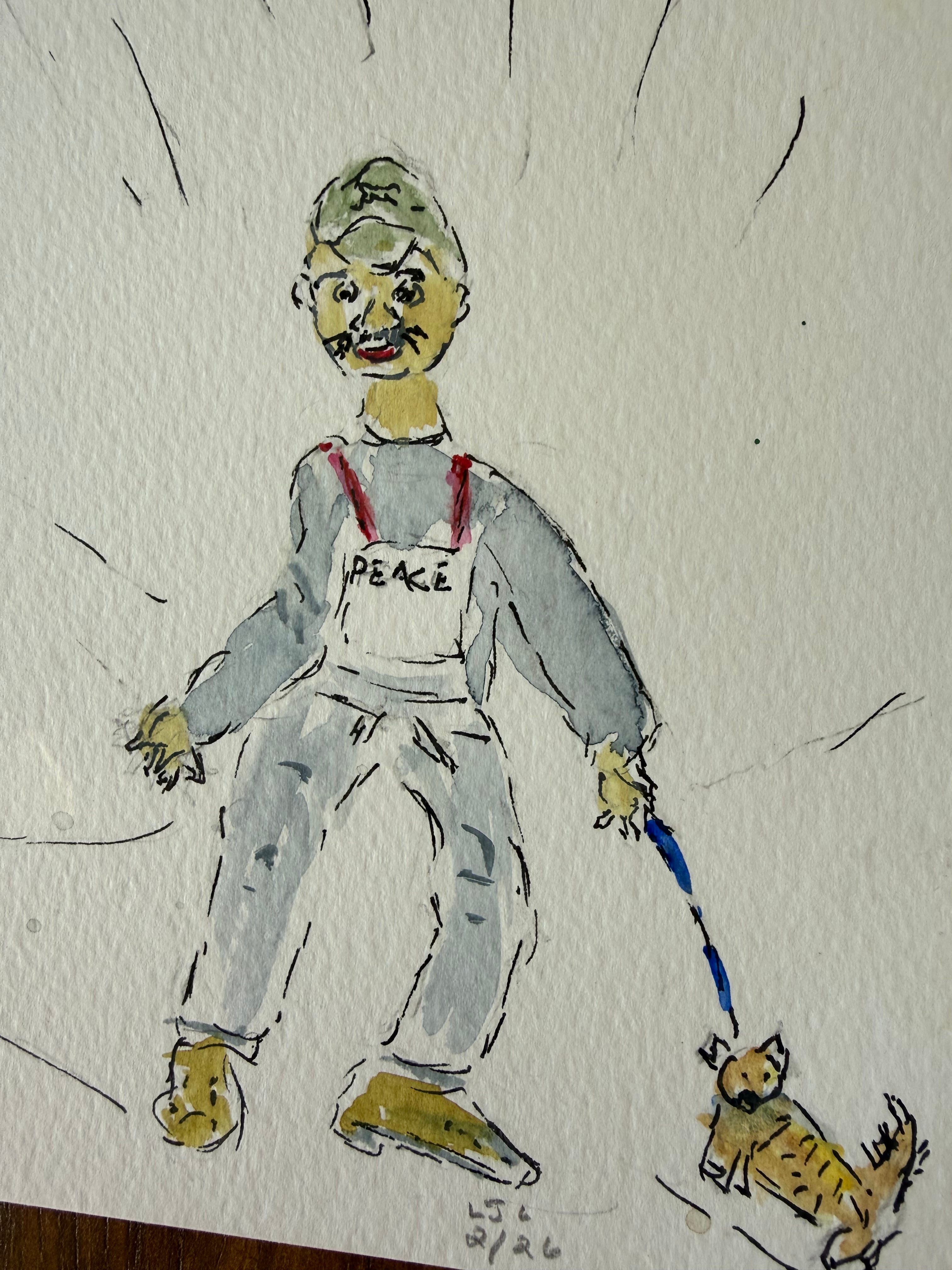
Embrace the love in your heart. What a lovely reminder on what seem like dark days.
Thanks, Blayney. I remember those ways well. Do they still exist in any meaningful form or fashion?